

When people think of Iceland, most fly fishers think of salmon. But trout enthusiasts will find some of Europe’s most interesting waters here, with wild fish of a size that’s hard to find elsewhere. Two waters stand out: Laxá í Aðaldal in the north and Þingvallavatn in the south. They’re very different, bring out completely different sides of trout fishing, and can be combined on the same trip.
Laxá í Aðaldal: dry fly fishing for wild trout
Laxá flows out of Lake Mývatn toward the north coast. The lower sections are known as salmon water, but farther upstream, in Mývatnssveit and Laxárdalur, wild trout are the focus. The river is often described as one of the most nutrient-rich in Iceland. Midges and blackfly larvae are abundant, and it shows in the fish. The average weight is often between one and two and a half kilos, and larger trout are caught every season.
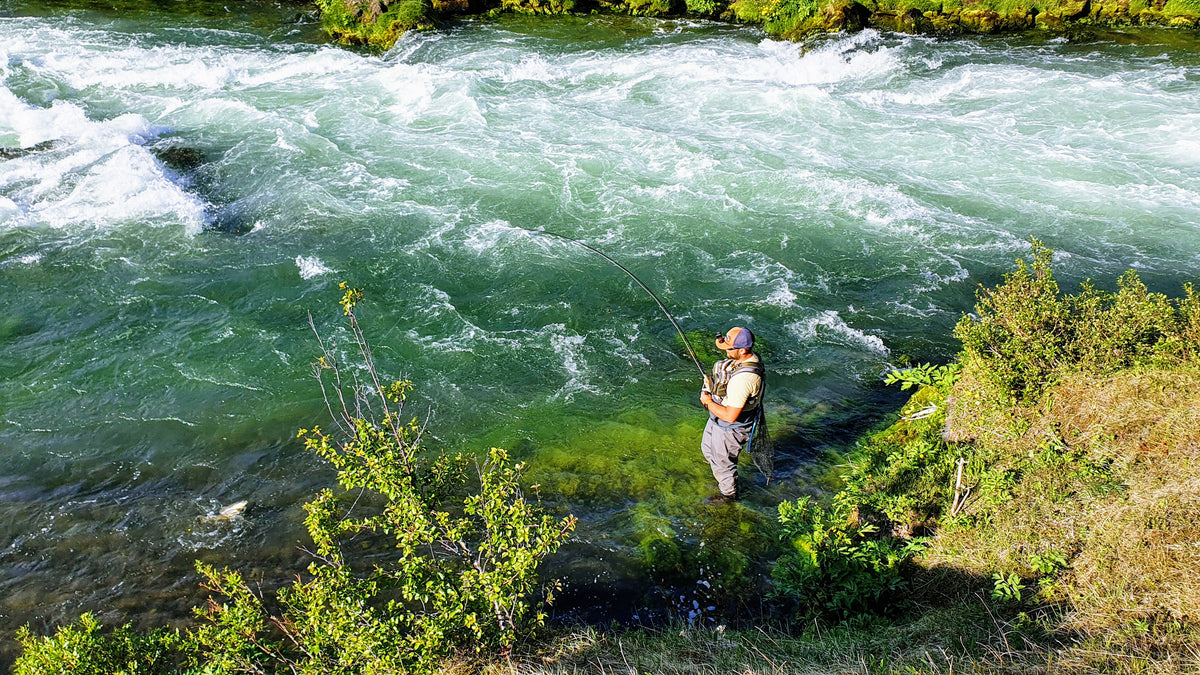
The two sections fish quite differently. In Mývatnssveit, the river splits into several channels between small, grassy islands, with fast runs, pocket water and slower pools. Here, it’s all about getting the fly to drift properly in the current. Farther downstream in Laxárdalur, the river becomes wider and slower, with long flats where you walk and look for rising fish. It’s more like flats fishing than typical river fishing.
What surprises many people is the bottom. The black lava sand makes the water look deeper and darker than it is, and here and there are lava shelves that suddenly drop away. Wade carefully, both for your own sake and the fish’s. The trout are used to small insects and are often selective, so small flies and a quiet approach work best.
Early in the season, nymphs and streamers work best. When the hatches get going in summer, dry flies take over, and it’s hard to imagine anything more exciting than presenting a small fly to a two-kilo trout rising to the surface.
Þingvallavatn: Ice Age trout
Þingvallavatn is Iceland’s largest natural lake and lies in Þingvellir National Park, less than an hour’s drive from Reykjavík. The trout here have lived in isolation since the Ice Age and feed largely on a small Arctic char found only in the lake, called murta. The result is trout that can grow enormous, and during the best weeks, fish weighing over nine kilos are landed every season.
The fishing is divided into different beats, and on several of them, fly fishing and catch and release apply, with only a few rods allowed. The season runs from April to mid-September. The early part, from April to June, is usually best for those hoping to catch the biggest fish. Streamers that imitate sticklebacks work well, but when the hatch is on, trout also take nymphs and dry flies near the shore.
This is a fishery where you can go a whole day without a bite and then suddenly find yourself with the trout of a lifetime in your net. Pack your patience and some strong tippets.
Equipment for trout fishing in Iceland
- Laxá í Aðaldal: a 5 to 6 weight single-handed rod, a floating line, a long leader, and small dry flies, emergers and nymphs.
- Þingvallavatn: a 6 to 8 weight single-handed rod, a floating line and a sinking line, streamers that imitate sticklebacks, plus a few nymphs and dry flies.
- Clothing: waders, warm layers and a good rain jacket. The weather in Iceland can change several times in a single day.
How we plan a trout fishing trip to Iceland
We don't have a set package for Iceland; instead, we build the trip around how you want to fish. It could be a week at a lodge with a guide and all meals included, or a simpler setup with a rental car and self-catering, where you combine several waters. If you'd like to include Þingvallavatn, you can add a few days in the south before flying home.
If you're also curious about Arctic char, you can read our guide to Arctic char fishing in Iceland, and in our overview of the waters in northern Iceland, you'll see which species are found where.
Read more about fly fishing in Iceland
Frequently asked questions about trout fishing in Iceland
When is the best time for trout fishing in Iceland?
On most waters, the season runs from April to September or October. At Þingvallavatn, April to June is usually best for big fish, while dry fly fishing in Laxá í Aðaldal is at its best in summer when the hatches are underway.
How big do Icelandic trout get?
In Laxá í Aðaldal, the average is often between one and two and a half kilos. At Þingvallavatn, fish weighing over nine kilos are caught every season.
Do you need a guide?
On many waters, you can fish without a guide, but a guide who knows the water makes a big difference, especially the first time. We tailor the trip to include as much or as little guiding as you like.
Would you like to learn more or start planning your trip? Call us at 031 375 82 00 or email info@outsidetravels.com.
See you by the river.
The team at Outside Travels